Young Engineers from Astana Win Award at International Robotics Olympiad
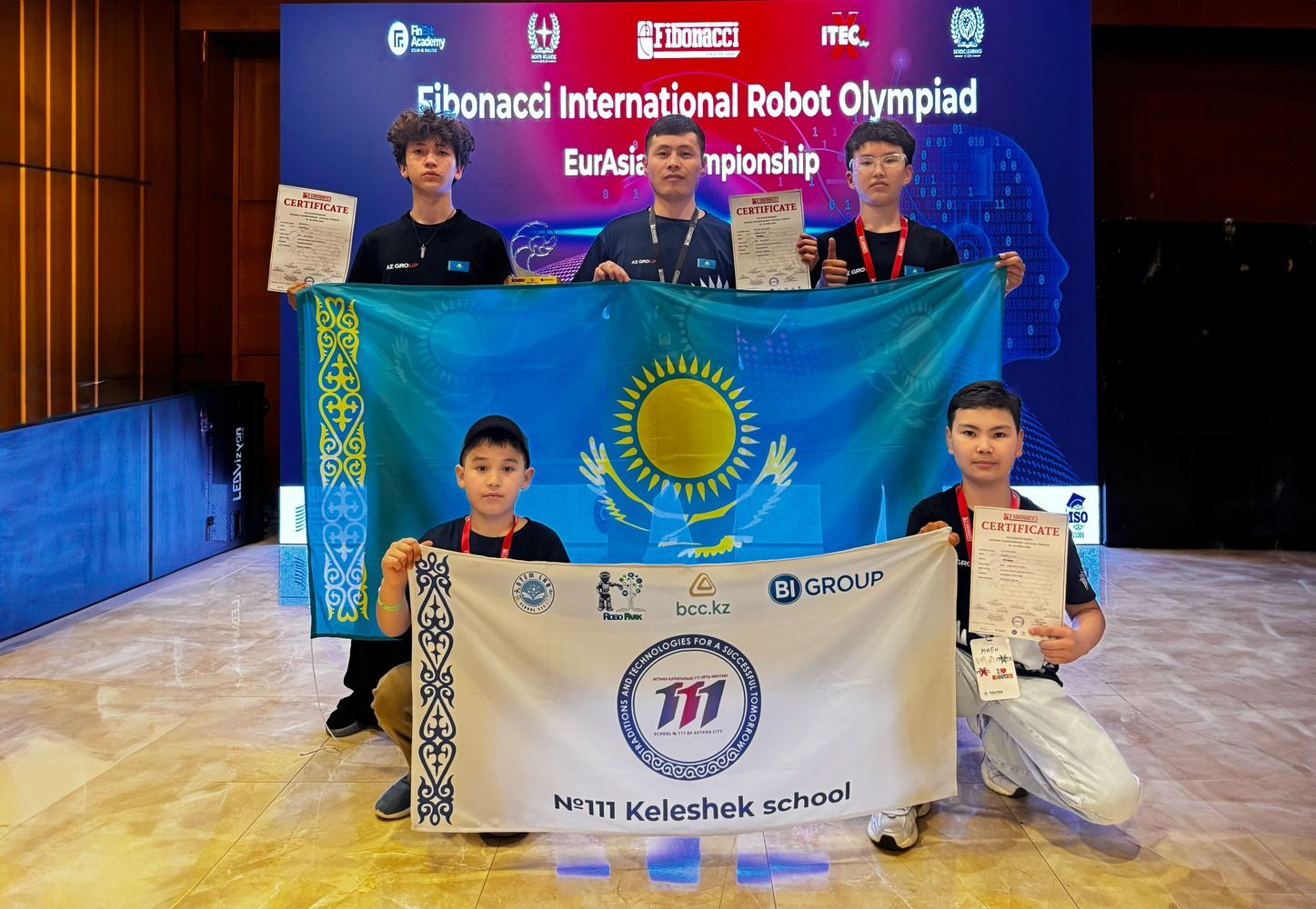
The One-eleven team from Secondary School No. 111 in Astana became a prize winner at the Fibonacci Eurasia Robot Olympiad (FIRO 2026), held in Antalya. In the FOOTBOT LEGO LEAGUE category, the students received a special Judges’ Award, granted for engineering solutions, quality of execution, and project potential.
The competition brought together hundreds of teams from nearly 20 countries, ensuring a high level of competition and making the tournament one of the key platforms in educational robotics. The Kazakh delegation was among the largest, reflecting the growing interest in STEM fields and the development of engineering skills among school students.
The One-eleven team, consisting of 7th-grade students Salauat Tabarak and Nurzhan Murat, worked under the guidance of mentor Yerlan Badilov. As noted by the school’s principal, Danara Dzhumartova, the team followed a full engineering cycle: “The participants were involved in the design, assembly, and programming of the robot, as well as testing its performance in conditions close to those of the competition.” This approach enabled the team to demonstrate consistent results during the trials.
External support also played an important role in this success. The participation of one of the key team members, Salauat, was made possible thanks to the support of Alem Qurylys AQ, a technology-oriented company within the BI Group holding, which implements initiatives in education and the development of engineering skills among youth as part of its social responsibility activities.
“School No. 111 was built by our company in 2024, and we continue to maintain warm relations with its management and students. For us, supporting such educational and engineering projects is an investment in the country’s technological future. Today’s school students working with robotics and engineering challenges are shaping the talent pool that will define the economy of tomorrow,” said Alibek Omarov, CEO of Alem Qurylys AQ.
According to Danara Dzhumartova, each participant’s contribution was critical to the final result. In particular, Salauat was responsible for the core engineering component of the project - assembling and configuring the robot’s mechanics, as well as optimizing it during the competition. During the trials, he promptly resolved technical issues and adapted the design to meet task requirements.
“Thanks to his solutions, the team was able to consistently complete tasks and score enough points to achieve a prize-winning result,” the principal emphasized. She also noted that without external support, Salauat’s participation would have been difficult, which could have significantly affected the team’s level of preparation and overall performance.
Following the competition, the top teams earned the opportunity to present their projects at the global stage, which will be held in Rome. For the students, this is a chance to advance to a new level, exchange experience with the international community, and continue their development in the engineering field.
The story of the One-eleven team demonstrates how a combination of systematic training, individual contribution, and timely support enables school students to achieve success on the international stage.